How Fleet Management Systems Help Improve Vehicle Operations in Nepal
By Pathibhara Solutions · Published September 21, 2026
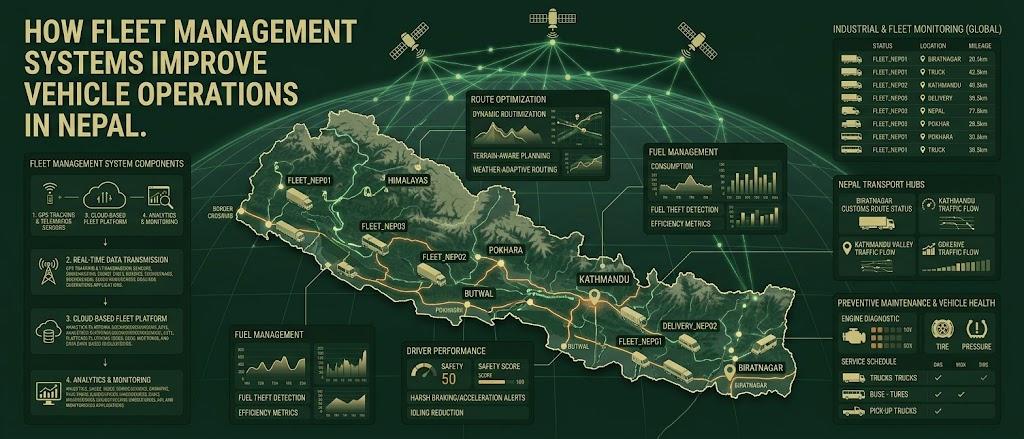
Fleet management systems help businesses monitor vehicles, organize operations, and access useful information about fleet activity. Learn how digital fleet management can support better vehicle operations in Nepal.
How Fleet Management Systems Help Improve Vehicle Operations in Nepal?
Managing multiple vehicles can be challenging, especially when vehicles travel across cities, highways, and remote areas. Businesses and organizations need to keep track of vehicle locations, routes, drivers, and daily operations.
A fleet management system brings these activities into one platform, helping organizations monitor vehicles and manage their operations more efficiently.
What Is a Fleet Management System?
A fleet management system is a technology platform used to monitor and manage vehicles. It can use GPS tracking, mobile connectivity, sensors, and software to provide information about vehicle activity.
Depending on the system, fleet managers can monitor vehicle location, speed, routes, travel history, and other operational information from a centralized dashboard.
How Fleet Management Improves Vehicle Operations
1. Real-Time Vehicle Tracking
GPS tracking allows fleet managers to see the current location of vehicles without having to contact drivers individually.
This can be useful for businesses managing delivery vehicles, public transportation, service vehicles, and other mobile fleets.
2. Route and Trip Monitoring
Fleet management systems can record routes and travel history. Managers can review where vehicles have traveled and identify unnecessary stops or changes in routes.
This information can help organizations better understand their daily vehicle operations.
3. Monitoring Driving Behavior
Some fleet management systems provide information about driving behavior, including speed and other driving events.
Monitoring this information can help businesses identify unsafe driving patterns and encourage drivers to follow appropriate safety practices.
4. Better Fleet Visibility
When an organization manages many vehicles, keeping track of every vehicle manually can take considerable time.
A centralized monitoring system provides fleet managers with vehicle information in one place, making it easier to monitor multiple vehicles remotely.
5. Faster Response to Incidents
Vehicle tracking and alert systems can provide useful information when unexpected events occur.
Depending on the system, alerts may be available for events such as overspeeding, unusual vehicle activity, or emergency situations. This can help responsible teams respond more quickly.
Why Fleet Management Is Useful in Nepal
Nepal's diverse geography means vehicles may operate across busy urban roads, highways, hilly areas, and remote locations. Maintaining visibility over vehicles can therefore be important for organizations operating fleets across different regions.
Fleet management systems can support a range of organizations, including:
- Transportation companies
- Logistics and delivery businesses
- Public and private vehicle operators
- Construction companies
- Schools and institutions
- Government organizations
- Corporate vehicle fleets
Fleet Management and Cost Control
Fleet management technology can also help organizations understand how vehicles are being used.
Information about routes, trips, vehicle activity, and driving behavior can help managers identify areas where operational efficiency could be improved.
The system itself does not automatically reduce costs, but the data it provides can support better decisions about vehicle usage and fleet operations.
Combining GPS Tracking With Other Technologies
Modern fleet management systems can combine GPS tracking with technologies such as dashcams, sensors, mobile applications, and automated alerts.
For example, a GPS tracking system can provide vehicle location while a connected dashcam can provide video information. Bringing these technologies together can give fleet managers a broader view of vehicle activity.
Conclusion
Fleet management systems provide organizations with a centralized way to monitor vehicles and manage daily operations. Through GPS tracking, route monitoring, driving information, and alerts, businesses can gain better visibility into their fleets.
For organizations operating vehicles in Nepal, connected fleet management technology can provide useful data for improving monitoring, safety, and operational decision-making.